For importers, distributors, and retail buyers who are sourcing their canned sardines at commercial volume, the choice between canned sardine in tomato sauce and canned sardine in vegetable oil is more important than just product preference. It is basically a sourcing decision that has a direct impact on shelf performance, consumer acceptance, and how well the product moves through a given distribution channel.
It becomes crucial to understand the differences between both preparations and know which markets favor which format, so that clients can make an informed decision when they are building their own product range or establishing a long-term supply program.
What Sets the Two Preparations Apart
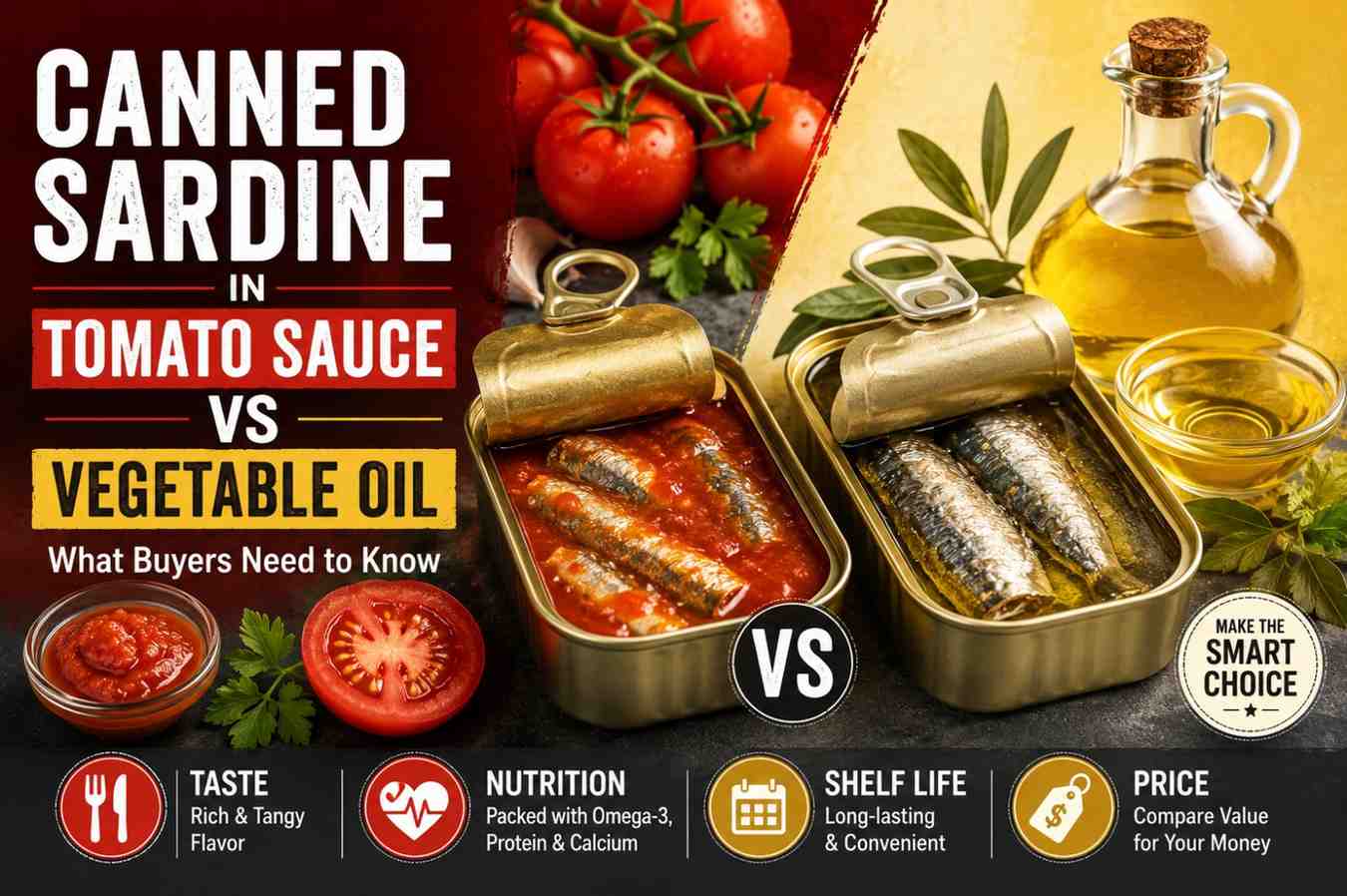
The primary difference between the two is their packaging medium. In the case of canned sardine in tomato sauce, we pack the fish in a tomato-based sauce that contributes a distinct flavor profile and color to the finished can. On the other hand, a canned sardine in vegetable oil product is fish submerged in oil, which preserves moisture and produces a milder, cleaner finish.
From the perspective of manufacturing, we follow the same core production sequence for both preparations, moving through raw material inspection, cleaning, cooking, filling, sealing, and sterilization. However, the primary difference comes during the filling stage, where you either add a sauce or oil before sealing the can.
In both formats, the shelf life is comparable and best suited to the temperature ranges typical of international shipping and retail storage conditions. The choice between them is largely based on consumer preference in the target market, instead of any significant difference in shelf stability or handling requirements.
Market Preferences and Distribution Considerations
The buyers who are supplying to African markets will generally find that canned sardine in tomato sauce has a much broader consumer base. Where the tomato sauce preparations are deeply embedded in the eating habits of many West and East African markets, canned sardines are also frequently consumed as a meal component rather than a snack or secondary ingredient. When preserved in the sauce, it contributes directly to the flavor of the dish and reduces the need for additional preparation. This is what supports its popularity in markets where convenience and value are central purchasing factors.
Canned sardines in vegetable oil tend to perform well across markets in the Middle East, parts of North Africa, and Europe, where a cleaner product is preferred, and it can be incorporated into a wider range of preparations without the sauce affecting the flavor of the final dish. Oil-packed sardines are also generally used in food manufacturing and foodservice contexts where fish is not just an ingredient but a standalone product.
Buyers who are managing a product range across multiple regions find stocking both preparations to be a practical way of addressing different preferences within a diverse customer base without having to commit to a single format across various markets.
Packaging and Labeling Across Markets
We offer both these preparations in various can sizes, based on the intended distribution channel. While retail supply programs typically use smaller formats suited to individual or household consumption, foodservice and wholesale buyers often require larger formats or bulk packaging. Buyers should confirm their preferred sizing beforehand with the manufacturer, as this impacts our filling, sealing, and labeling process and how the final product turns out.
Labeling requirements might also differ in various markets, particularly in Africa and the Middle East, where regulatory and language requirements are different between countries. Clients can coordinate the labeling specifications before we begin production. This is a straightforward way for avoiding any delays and ensuring that your product arrives market-ready without the need for relabeling at the destination.
Sourcing From a Reliable Manufacturer
Whether you are sourcing canned sardine in tomato sauce, canned sardine in vegetable oil, or both, the key factor in any long-term supply relationship is consistency. When you get a product that meets specifications on the first shipment but varies on subsequent orders, it creates downstream problems for retailers and distributors who have already placed it on shelves or built it into their own supply commitments.
At Fieste Food, we ensure that both of our sardine preparations are manufactured under the same controlled production conditions. We have integrated quality checks in every stage of the process. This ensures that all our clients receive a consistent product across repeated orders, supported by internal export coordination that keeps communication direct and lead times predictable.
Get in touch with us, discuss your requirements, and we will provide you with
Frequently Asked Questions
Q2. Which markets prefer canned sardine in tomato sauce?
Ans. Tomato sauce preparations are most popular across West and East African markets, where canned sardines are a staple food product consumed regularly at both household and foodservice levels. Buyers supplying these markets will generally find tomato sauce to be the stronger-performing format.
Q3. Which markets prefer canned sardine in vegetable oil?
Ans. Canned sardine in vegetable oil is commonly preferred across parts of the Middle East, North Africa, and Europe. It is also used in food manufacturing and foodservice applications where the sardine serves as an ingredient in a broader recipe or preparation.
Q4. Can buyers source both preparations from Fieste Food?
Ans. Yes. Fieste Food manufactures both canned sardine in tomato sauce and canned sardine in vegetable oil, allowing buyers to source multiple preparations from a single manufacturing partner. This simplifies coordination and keeps product specifications consistent across different formats.
Q5. How do I request a quotation for canned sardine products?
Ans. Contact our team with your preferred preparation, packaging size, estimated order volume, and destination market. We will review your requirements and prepare a customized quotation with the relevant product and logistics details tailored to your sourcing needs.