Canned tuna is a popular seafood choice for households, retailers, foodservice businesses, and food manufacturers around the world. Its long shelf life, convenient packaging, and versatility make it a practical product for modern food supply chains. However, the quality of canned tuna depends heavily on what happens inside a professional canned fish factory.
From selecting suitable raw materials to controlled processing, filling, sealing, sterilization, and final inspection, every stage contributes to the quality of the finished product. Understanding these processes helps importers, distributors, wholesalers, and retailers make more informed sourcing decisions.
What Happens Inside a Canned Fish Factory?
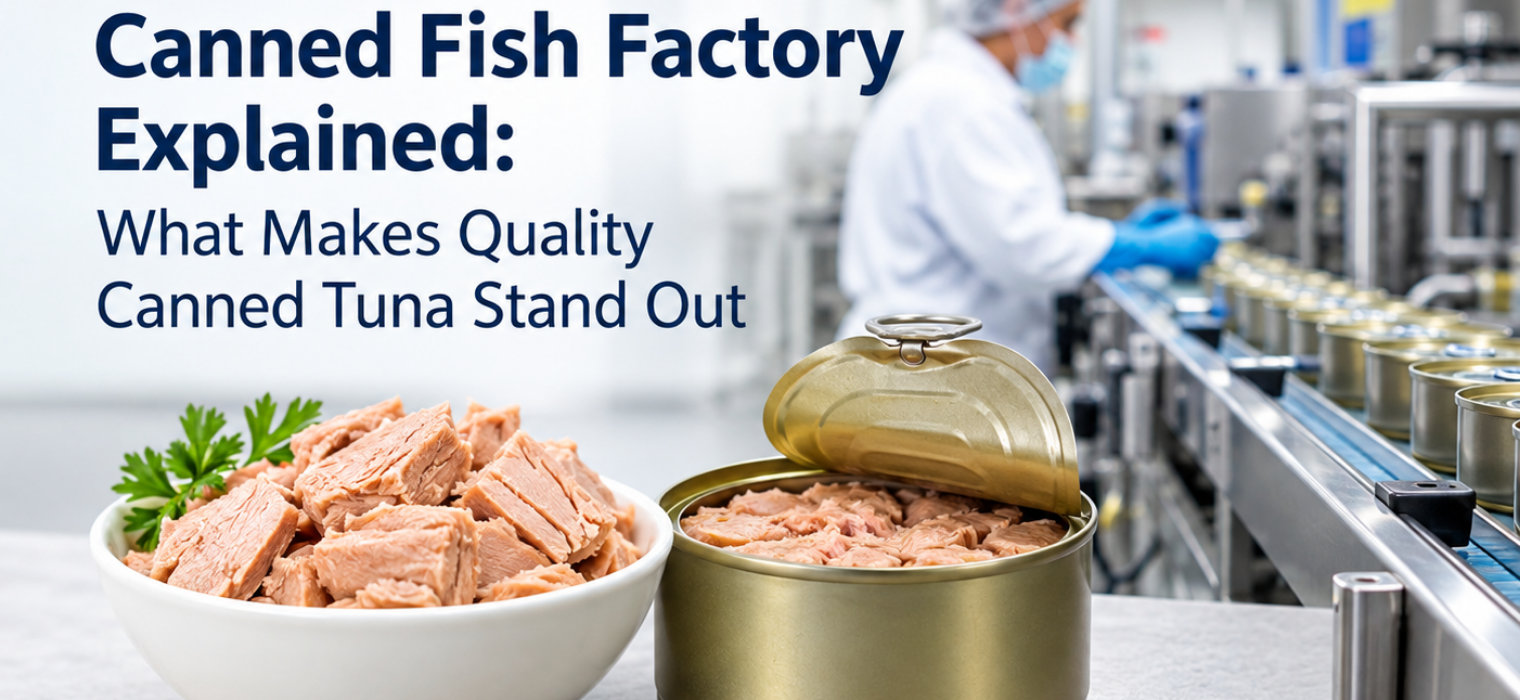
A modern canned fish factory is designed to manage multiple stages of seafood production under controlled conditions. The objective is not simply to place fish into cans. The entire process must protect product quality, maintain consistency, and create a shelf-stable product suitable for transportation and storage.
Production begins with the careful selection and inspection of raw fish. Quality raw materials are essential because the condition of the fish directly influences the texture, flavor, appearance, and overall characteristics of the finished product.
Once selected, the fish undergoes cleaning and preparation. This stage removes unwanted parts and prepares the fish for further processing. Careful handling throughout this stage helps preserve the natural characteristics of the seafood.
Controlled Processing Makes a Difference
After preparation, the fish goes through controlled cooking or processing before being filled into cans. Processing must be carefully managed because excessive cooking can affect texture, while inadequate processing can create food safety concerns.
A professional canned fish factory therefore relies on controlled production procedures and monitoring throughout the manufacturing process. Consistency is particularly important for businesses purchasing canned tuna in bulk because every shipment needs to meet the expected product specifications.
At Fieste Food, controlled manufacturing processes are used across canned seafood production to support consistent quality for international customers. With more than 13 years of experience in food manufacturing, the company operates multiple production lines designed to support large-scale production and international supply requirements.
Proper Filling and Canning
Filling is another important stage in canned tuna manufacturer production. Prepared fish is placed into cans along with the selected packing medium, depending on the product specification.
The packing medium can influence the final eating experience and product characteristics. Depending on customer requirements and market preferences, canned seafood may be prepared using oil, sauce, brine, or other suitable preparations.
Consistent filling is important for both consumers and commercial buyers. Uniform product presentation helps retailers maintain predictable product standards, while accurate filling supports efficient packaging and distribution.
Sealing and Sterilization for Shelf Stability
One of the defining advantages of canned seafood is its ability to remain stable for extended periods when properly processed and packaged. This depends heavily on effective sealing and sterilization.
After filling, cans are securely sealed and subjected to controlled sterilization procedures. This stage is critical because it helps support product safety and shelf stability.
The integrity of the can is also important. Proper sealing protects the contents from external contamination while allowing the product to withstand transportation and storage conditions. For international food businesses, reliable packaging is particularly important because products may travel long distances before reaching their final market.
Quality Control Throughout Production
Quality control should not be limited to the final inspection. A reliable canned fish factory integrates quality checks throughout production.
Raw materials should be inspected before processing. Production stages should be monitored to maintain consistency. Packaging should be checked for integrity, and finished products should undergo final evaluation before shipment.
This approach helps identify potential issues earlier in the production process and supports consistent standards across different production batches.
Fieste Food integrates quality control into raw material selection, processing, canning, packaging, and final product evaluation. This systematic approach supports businesses that require dependable seafood products for retail, foodservice, wholesale, and private-label applications.
Why Manufacturing Capacity Matters
For importers and distributors, product quality is only one part of the sourcing decision. Manufacturing capacity and supply reliability also matter.
A factory with established production infrastructure can better support larger orders and recurring supply programs. Fieste Food operates a 78,600-square-meter facility in Hebei, China, with 16 production lines and a stated daily production capacity of 200,000 packages.
This type of production infrastructure helps support customers with different order volumes and packaging requirements while maintaining a structured manufacturing process.
Packaging for Different Markets
Canned tuna may be sold through supermarkets, retail stores, foodservice operations, wholesalers, and private-label brands. These different channels can require different packaging formats and specifications.
A flexible canned fish factory should therefore be able to support standardized packaging as well as customer-specific requirements. Packaging can be adapted to market needs, distribution objectives, and branding programs.
For businesses developing private-label seafood products, this flexibility can make it easier to create products that fit their target market and sales strategy.
What Makes Quality Canned Tuna Stand Out?
Ultimately, quality canned tuna manufacturer is the result of several factors working together. Good raw materials provide the foundation. Controlled preparation and processing help maintain product characteristics. Accurate filling ensures consistency, while proper sealing and sterilization support safety and shelf stability.
Quality inspections throughout production add another layer of reliability, while appropriate packaging helps protect the product during transportation and storage.
For commercial buyers, these factors are especially important because the quality of a canned seafood product can influence customer satisfaction, repeat purchases, brand reputation, and long-term business relationships.
Choosing the Right Canned Fish Factory
Selecting a canned fish manufacturer should involve more than comparing product prices. Buyers should consider manufacturing experience, production capacity, quality control procedures, packaging capabilities, export experience, and the ability to maintain consistent supply.
Fieste Food supports international food businesses with canned seafood manufacturing, flexible packaging solutions, quality control, and export-focused operations. Its canned seafood range is designed to serve importers, distributors, wholesalers, retailers, foodservice businesses, and private-label customers.
For businesses seeking dependable canned tuna manufacturers and other seafood products, understanding how a canned fish factory manages production is an important step toward choosing the right supply partner. When quality control is integrated from raw material selection through final shipment, the result is a canned seafood product built for consistency, convenience, and reliable performance in international markets.
FAQs-
1. What is a canned fish facility and how does it produce quality tuna?
A canned fish facility uses a controlled production process that includes raw material selection, cleaning, preparation, cooking, filling, sealing, sterilization, inspection, and packaging. Canned Fish Factory Explained: What Makes Quality Canned Tuna manufacturer Stand Out highlights how each stage contributes to consistent quality, safety, taste, and shelf stability.
2. What makes quality canned tuna stand out from other canned fish products?
Quality canned tuna stands out because of carefully selected raw materials, controlled processing, proper cooking, secure can sealing, sterilization, and strict quality inspections. These steps help maintain the tuna’s texture, flavor, appearance, and overall product consistency.
3. Why is the manufacturing process important for canned tuna?
The manufacturing process is essential because every stage affects the final product. A well-managed production facility controls processing conditions from preparation through sterilization to help deliver safe, consistent, and shelf-stable canned tuna for different markets.
4. Can tuna be produced for private-label businesses?
Yes. A professional canned fish manufacturer can support private-label brands, importers, distributors, retailers, and foodservice businesses. Products can be developed with different packaging formats and preparation specifications to meet customer requirements and target-market needs.
5. How can businesses choose the right manufacturer for tuna products?
Businesses should evaluate production capacity, quality control procedures, processing capabilities, packaging options, export experience, and the manufacturer’s ability to handle large-volume orders. Canned Fish Factory Explained: What Makes Quality Canned Tuna Manufacturer Stand Out demonstrates why these factors are important when selecting a reliable manufacturing partner.